Episodes

Does OpenAI Need a Bailout? Mamdani Wins, Socialism Rising, Filibuster Nuclear Option
All-In Podcast
11/7/2025
In this episode of the All-In Podcast, guest Brad Gerstner joins hosts David Sacks, Jason Calacanis, and Chamath Palihapitiya to dissect a tumultuous week for OpenAI. The conversation kicks off with Sam Altman's controversial and 'feisty' response on Brad Gerstner's podcast to questions about OpenAI's massive $1.4 trillion spending commitments, which intensified market fears of an AI bubble and impacted the stock prices of partners like Microsoft, Nvidia, Oracle, and Broadcom. The situation escalated when OpenAI's CFO, Sarah Frier, mentioned a desire for a Federal backstop for AI in the Wall Street Journal, a remark she quickly walked back after it was widely perceived as a bailout request to the US Government. David Sacks firmly dismisses the idea of a bailout, highlighting the robust competition in the AI sector from companies like Anthropic (with its Claude model) and Google (with its Gemini model). The discussion then broadens to the geopolitical AI Race between the United States and China. Nvidia CEO Jensen Huang's warning that China could win is a key talking point, with the hosts citing the US's disadvantage of navigating a complex patchwork of State AI Regulation versus China's centralized and efficient approach under the Chinese Communist Party. David Sacks advocates strongly for Federal Preemption for AI to establish a unified national standard and prevent 'ideological capture' of Generative AI models by state-lev

AI, Attention, and Ownership: Ari Emanuel Explains the Next Era of Entertainment
All-In Podcast
11/5/2025
In this discussion, Ari Emanuel, CEO of Endeavor, outlines his journey and strategic vision for the future of entertainment in Hollywood. He details how the concept of Infinite Distribution, inspired by author George Gilder, shaped his M&A Strategy to build a powerhouse by merging with William Morris Endeavor (WME) and acquiring IMG and UFC. This culminated in the creation of TKO through a merger between UFC and WWE, a deal made with Vince McMahon, to create a pure-play Sports Entertainment giant. Emanuel emphasizes the critical importance of IP Ownership, contrasting the lucrative traditional Syndication Business Model, exemplified by Oprah, with the current streaming model of platforms like Netflix. He sees the future of the Creator Economy—with figures like Mr. Beast on YouTube and Tucker Carlson—mirroring this shift towards creators owning Creator-owned products. Looking forward, Emanuel discusses the societal impact of AI and Humanoid Robots, predicting a 3-day workweek and a corresponding surge in demand for human connection, which informs his major bet on Live Events, a market where Live Nation is also a key player. This strategy positions live experiences as the counterweight to a digital future, a view shaped by his friendship with Elon Musk. He also reflects on his career origins in the Representation Business, working for Michael Ovitz at CAA, and his drive to build a better culture than competitors like ICM. The conversation touches

Inside Saudi Arabia’s AI Ambition: Tareq Amin on Building a New Tech Superpower
All-In Podcast
11/4/2025
In this detailed discussion, Tareq Amin, CEO of Humain, articulates a bold vision for Saudi Arabia to emerge as a global AI and technology superpower, a core tenet of the nation's Vision 2030 plan spearheaded by MBS. Tareq Amin explains that Humain was created to address a significant deficit in regional AI Infrastructure, transforming it into an opportunity. By leveraging Saudi Arabia's unique Energy Advantage and its burgeoning, Western-educated Talent Pool, the goal is to establish the nation as a premier Digital Champion. A cornerstone of this strategy is vertical integration, which includes developing proprietary Foundational Models like the Arabic-first humane chat and building enterprise solutions such as humane one. Geopolitically, the strategy hinges on forging a strong US-Saudi AI Alliance, involving deep partnerships with leading US tech companies like AMD, Nvidia, Qualcomm, and the startup Grock, particularly in the high-growth area of AI Inferencing. This alliance is explicitly positioned by commentator David Sacks as a strategic countermeasure to the technological ambitions of China, and its national champion, Huawei. While partnering with global Hyperscalers like AWS and Google, Humain also aims to be a compelling regional alternative. The conversation, hosted by David Friedberg who is also bringing his Foundry University to Riyad, underscores a major economic and technological transformation underway in the Middle East, signalin

Triple H on How WWE Evolved: Trump, The Rock, and the Rise of the Antihero
All-In Podcast
11/3/2025
In this discussion, Paul “Triple H” Levesque, the Chief Creative Officer of WWE, provides insights into the evolution of the professional wrestling business. He explains that the key to success is Charisma, citing Donald Trump and The Rock as prime examples of personalities honed in the wrestling world. Levesque details the creative shift during the Attitude Era, which saw the rise of the Antihero Persona and the modern Heel (Wrestling Term), exemplified by figures like Stone Cold Steve Austin, a departure from the classic Baby Face (Wrestling Term) archetype of Hulk Hogan. A core theme is WWE's business strategy, contrasting it with competitors like the UFC by emphasizing Storytelling in Wrestling over pure competition, drawing parallels to Marvel's long-term planning for flagship events like WrestleMania. The company's Live Events Business Model is central, using a diverse array of media partners—including major streaming deals with Netflix and ESPN, alongside broadcast partners like CW, USA Network, and Peacock—as a funnel to drive audiences to live shows in global markets like Paris, France. Levesque also touches on the impact of the Internet, which has necessitated a Blending Persona and Reality for performers, and the intense Physical Toll of Wrestling. He reflects on his own influences, such as Arnold Schwarzenegger, Shawn Michaels, and Ric Flair, and discusses WWE's past use of Geopolitics in Wrestling to create characters, a practice less common today

Elon Musk: 3 Years of X, OpenAI Lawsuit, Bill Gates, Grokipedia & The Future of Everything
All-In Podcast
10/31/2025
In a comprehensive interview on the All-In Podcast with hosts David Sacks, Jason Calacanis, and Chamath Palihapitiya, Elon Musk marked the three-year anniversary of his Twitter acquisition. He detailed the transformation of Twitter into X, emphasizing a core mission to restore Free speech and combat what he terms the 'Woke Mind Virus'. This involved overhauling the platform's algorithm with Grok, an AI (Artificial Intelligence) from his company XAI. This same AI powers Grokipedia, an encyclopedia Musk presents as a vastly superior, truth-seeking alternative to Wikipedia. He reflected on the release of the Twitter Files, which he says exposed systemic Censorship practices like Shadow banning and extensive collusion between former Twitter executives and government agencies like the FBI. The discussion extended to Musk's other ventures and ongoing conflicts. He elaborated on the rationale behind his OpenAI lawsuit, stating that OpenAI, a company he co-founded as a non-profit counterweight to Google's AI dominance, fundamentally betrayed its mission by becoming a closed-source, for-profit entity under CEO Sam Altman. He recounted a past ideological clash with Google co-founder Larry Page over AI safety, highlighting his long-held concerns. Regarding Tesla, Musk addressed a crucial shareholder vote on his compensation, framing it as a matter of Corporate Governance. He argued for needing a larger voting stake to ensure the safe development of the Optimus humanoid robot an

Pete Buttigieg: The Left's Identity Crisis, Wealth Tax, 2024 Mistakes, Plans for 2028
All-In Podcast
10/30/2025
In a detailed interview on the All-In Podcast with hosts Jason Calacanis and Chamath Palihapitiya, Pete Buttigieg provided a candid analysis of the Democratic Party's current state and his own political future. A central theme was the party's fractured relationship with Silicon Valley, with Buttigieg suggesting that the Republican Party's favorable Tax Policy has attracted tech leaders like Elon Musk, Tim Cook, and Mark Zuckerberg. This led to a broader discussion on taxes, where Buttigieg expressed conditional support for a Wealth Tax, contrasting his moderate stance with more aggressive proposals from Zohran Mamdani in New York City and those floated in California, while also referencing national figures like Elizabeth Warren and Bernie Sanders. Reflecting on his time in the Biden Administration as head of the Department of Transportation, Buttigieg defended the rollout of the EV Charging Infrastructure program, explaining the intentional decision to build a domestic supply chain instead of relying on China. He also discussed the challenges of upgrading the FAA (Federal Aviation Administration)'s technology, the possibility of integrating NASA into the DOT, and the complex legislative process involving figures like Joe Manchin and White House Chief of Staff Ron Klain. Buttigieg argued that the Democratic Party has become overly focused on Identity Politics, a key element of the current Culture Wars, which hinders its ability to form the broad coalitions of the {
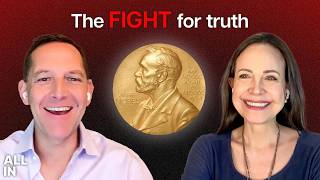
Defeating Maduro, Socialism & Freeing Venezuela - Nobel Peace Prize Winner María Corina Machado
All-In Podcast
10/28/2025
In an interview on the All-In Podcast, host David Friedberg speaks with María Corina Machado, the Venezuelan opposition leader and 2025 Nobel Peace Prize winner, about her fight to free Venezuela. Machado details the country's transformation from a prosperous nation, rich from its oil reserves, to a failed state under 26 years of Socialism. She traces the decline to Hugo Chávez, who rose to power with a Populist Narrative and implemented policies like Oil Nationalization that centralized state control. His successor, Nicolás Maduro, who was allegedly chosen by Cuba, has intensified the regime's oppressive nature, turning it into a criminal structure involved in Drug Trafficking and committing vast Human Rights Violations. This regime is supported by international allies like Russia and Iran and is accused of aiding terrorist groups like Hamas and Hezbollah. Machado recounts her own journey from founding the civic organization Sumate to being elected to the National Assembly (Venezuela), from which she was expelled after denouncing the regime at the Organization of American States (OAS). She describes the recent election where, after being disqualified, she backed a surrogate, Edmundo González. Despite evidence of a landslide victory collected by a million volunteers using the Internet and smuggled Starlink technology, the regime-controlled National Electoral Council (Venezuela) declared Maduro the winner through blatant Election Fraud. Machado praises former United States

Nobel Prize in Physics Winner: The Quantum Leap That Changed Everything - John Martinis
All-In Podcast
10/27/2025
In an interview on the All-In Podcast, host David Friedberg speaks with John Martinis, the 2025 winner of the Nobel Prize in Physics. Martinis explains his career path, starting at UC Berkeley under his advisor John Clark, where he conducted the research detailed in his landmark 1985 paper on macroscopic quantum mechanics. Inspired by a question posed by physicist Anthony Leget, Martinis's experiment demonstrated for the first time that a macroscopic object—an electrical circuit built with Superconductors and a Josephson Junction—exhibits quantum phenomena like Quantum Tunneling. This work, which proved Macroscopic Quantum Mechanics and expanded the understanding of Quantum Mechanics itself, laid the experimental foundation for the entire field of Quantum Computing. Martinis recounts being motivated by a lecture from Richard Feynman and how the field later gained traction with developments like Peter Shaw's Factoring Algorithm. He discusses his career progression, including working with his colleague Michelle Devare, his time at the National Institute of Standards and Technology and UCSB, culminating in his role leading Google's quantum lab in Santa Barbara. There, his team at Google achieved Quantum Supremacy in 2019. Martinis provides insights into the current state of the technology, explaining the role of Qubits in a Superconducting quantum computer, the immense challenge of Error Correction (in quantum computing), and the competitive landscape, where companies li

NBA Gambling Scandal, Billionaire Tax, Tesla's Future, Amazon Robots, AWS Outage, Dangerous AI Bias
All-In Podcast
10/24/2025
The All-In Podcast episode covers several critical topics for entrepreneurs. It begins with an analysis of the proposed California Billionaire Tax, a 5% one-time wealth tax initiated by the SEIU, sparking a debate on its constitutionality and the high risk of Capital Flight, citing examples of high-profile departures like Larry Ellison and Elon Musk and historical precedents from France with figures like Bernard Arnault. The discussion also touches on high taxes in New York as another driver of potential exodus. The conversation then shifts to the major NBA Gambling Scandal, where the FBI arrested 30 people, including NBA player Chanty Bilips, highlighting the convergence of Sports betting and technology, and positing that Prediction Markets platforms like Polymarket offer a more transparent model. A tough week for Amazon is dissected, focusing on a massive AWS Outage that underscores the need for a Multicloud model strategy, benefiting competitors like Microsoft, Google Cloud, and Oracle. Additionally, leaked documents from the New York Times revealed Amazon's plans for extensive Robotic Automation, fueling a broader discussion led by comments from Andy Jassy, Elon Musk, and Bernie Sanders about AI-driven job displacement and its potential to encourage Socialism. The podcast also delves into Tesla's future, with Elon Musk focusing on the Optimus robot, the new AI5 chip, and Tesla's Energy Business, while defending his controversial Elon