Episodes

Is Claude Conscious? Pope Rejects, Model Welfare Movement, OpenAI's Math Backlash, France Riots
All-In Podcast
10/9/2026
In this episode, hosts Jason Calacanis, Chamath Palihapitiya, David Sacks, and David Friedberg dive deep into the ideological and economic shifts driven by AI and macro-politics. The discussion kicks off with Anthropic and its researcher Chris Olah presenting to Pope Francis on the topic of AI Consciousness. The Pope rejected this, but the hosts criticize the internal push for Model Welfare regarding the AI model Claude, arguing it resembles a cult influenced by Effective Altruism and thought experiments like Eliezer Yudkowsky's Roko's Basilisk. Mustafa Suleyman of Microsoft is also noted for discussing this epistemic mirror, contrasting with simpler models like Asimov's Three Laws of Robotics. Meanwhile, OpenAI has demonstrated Mathematical Superintelligence by generating proofs verified by the Lean proof assistant. David Friedberg notes that AI accelerates the Discovery Loop, which fosters the Democratization of knowledge and bypasses the Institutional Capture that Eric Weinstein and Sabine Hossenfelder argue is prevalent in science—a gatekeeping trend previously embodied by figures like Anthony Fauci. On the macro front, the hosts analyze the riots in France triggered by Austerity and the failings of Socialism. Friedberg introduces the Socialism Point of Guaranteed Return, suggesting an inevitable collapse when systems ignore market forces. As the Bond Market reacts to unsustainable Debt to GDP levels, David Sacks points out that a Renti

Trump’s Super Intelligence Summit, AI Safety Accord, GDP Beats, Midterm Predictions
All-In Podcast
10/2/2026
In this episode, the hosts David Sacks, Chamath Palihapitiya, Jason Calacanis, and David Friedberg dissect the White House Accord on Super Intelligence. Organized by Donald Trump at the White House, this historic event gathered tech luminaries including Elon Musk, Jensen Huang of Nvidia, Mark Zuckerberg of Meta, Sundar Pichai of Google, Satya Nadella, and even initial holdout Dario Amodei of anthropic, alongside representation from OpenAI. Speaker Mike Johnson reviewed the accord text, which focuses on responsible Superintelligence development. The agreement mandates external audits by firms like EY, which is partnering with 8090. Gavin Baker highlighted that corporate boards face strict fiduciary duties regarding these audits, enforceable by the FTC and SEC, bypassing the need for sluggish international bodies like the UN. The panel emphasized the strategic necessity of robust Data centers and the Electricity Grid, framing them as critical to National security, much like the advanced radar capabilities of Starlink. As Open Source AI accelerates, there is an urgent need for advanced defense solutions, benefiting companies like Palo Alto Networks in the realm of Cybersecurity in the AI era. In parallel tech news, Google unveiled SynthID, an innovation linking AI with Digital Biology. Additionally, Joe Gebbia was praised for launching America.gov. Shifting to the macro economy, the panel debated the reality of the K economy}

Jake Paul & The Chainsmokers: Turning Fame into Funds, Jake Enters Politics? & Venture Bubble Signs
All-In Podcast
9/30/2026
In this episode, hosts Chamath Palihapitiya, Jason Calacanis, and David Friedberg interview Jake Paul alongside Drew Taggart and Alex Pall from The Chainsmokers. The discussion revolves around converting influence within the Attention Economy and the Creator Economy into institutional power in Venture Capital. Jake Paul discusses his origins on Vine and YouTube, which led to creating the social media label Team 10. He disrupted combat sports by co-founding MVP, partnering with the Professional Fighters League to challenge Dana White and the UFC. He also notes his efforts to elevate female athletes to the level of the WNBA. Using his massive reach, he launched the Anti Fund, investing in top-tier tech startups like Cognition, SpaceX (led by Elon Musk), and OpenAI (led by Sam Altman). He emphasizes the importance of backing elite founders like Palmer Luckey and speculates on a future political career inspired by the native social audience strategies of Donald Trump. Similarly, The Chainsmokers detail their rise in the Music Industry. Early on, they hacked the Hype Machine platform and leveraged Spotify to build a fanbase, ultimately securing a decade-long residency at the Wynn. This cash flow birthed their investment firm, Mantis VC. Inspired by brilliant founders such as Brian Chesky of Airbnb, Drew Houston, and Michael Seibel, they shifted their focus to Deep Tech, Cybersecurity, and Artificial Intelligence (AI). T

Daniel Ek: Life After Spotify, Broken Healthcare Incentives, Catching Disease Early & AI's Potential
All-In Podcast
9/28/2026
In a recent episode of the All-In Podcast, host David Friedberg and co-host Chamath Palihapitiya engage with Daniel Ek on his journey in Entrepreneurship. Ek reflects on his early career optimizing Stardoll alongside Mattias Miksche, a venture supported by Index Ventures and Sequoia Capital. Ek then explains how rampant Music Piracy, fueled by platforms like Napster and Kazaa, inspired him and Martin Lorentzon to launch Spotify in Sweden. They convinced the RIAA to embrace streaming as a legal alternative to piracy and the lack of iTunes availability. Shifting to Healthcare, Ek discusses the systemic issues of the US Healthcare System and his new vertically integrated startup, Neko Health, co-founded with Hjalmar Nilsonne. Neko Health exemplifies Vertical Integration and aims to shift medicine towards Preventative Health to combat Chronic Disease. Utilizing Machine Learning and AI in Healthcare, the company collects longitudinal data, pulling inputs from Apple Health and popular Wearables such as Oura, Whoop, and Fitbit. Having proven its model in Sweden and the UK, Neko Health is expanding across the United States, with its first clinic in New York and upcoming locations in Miami and Washington DC. The conversation then explores the broader AI landscape, particularly LLMs. Ek evaluates the dynamic between Open Source AI (including Open-weight models) and Closed source AI, noting historical parallel

Anthropic IPO at Risk, Meta’s Muse Pop, Token Prices Fall, Open Source Gains Share, Alignment Fails
All-In Podcast
9/25/2026
The recent All-In Summit hosted by Jason Calacanis, David Friedberg, Chamath Palihapitiya, and David Sacks featured a surprise appearance when Donald Trump called Jensen Huang on stage. This sparked a deep dive into Product Liability and whether frontier AI companies should hide behind the lab moniker or operate as standard corporations. Leaders like Lina Khan and JD Vance echo this sentiment of corporate accountability. The hosts contrasted the pragmatic approaches of Mark Zuckerberg at Meta, Elon Musk, and Satya Nadella with the erratic governance strategies of Sam Altman at OpenAI and Dario Amodei at anthropic. A major theme was the explosion of Open Source AI and the commoditization of AI Models. Companies like Alibaba and Xiaomi released powerful open weights, while Deepseek showcased extreme efficiency. The shifting ratio toward open-source AI Tokens is creating massive headwinds for the Anthropic IPO. Complicating matters, investors are raising concerns about founders demanding Super Voting Stock and the company controversially launching a biological Wet Lab in San Francisco to test AI predictions for AlphaFold and CRISPR protein therapies. On the compute side, the massive AI Infrastructure Buildout is continuing at scale, evidenced by trading firm Jane Street signing multi-billion dollar contracts with CoreWeave and Crusoe. Meanwhile, consumer utility is skyrocketing with the deployment of headless AI agents like Meta's Muse

Luca Ferrari, Bending Spoons CEO: The $40K Start, Buying Product-Market Fit & Beating Private Equity
All-In Podcast
9/23/2026
In this episode of the All-In Podcast, host Chamath Palihapitiya and the crew interview Luca Ferrari, the CEO of Bending Spoons. The conversation highlights how Bending Spoons achieved a massive valuation on the NASDAQ by perfecting a unique M&A Strategy. Rather than building products from scratch, the company focuses on acquiring Product Market Fit through major purchases like Eventbrite, AOL, Vimeo, and Brightcove. After acquisition, the company strictly applies its Operating System of 50+ proprietary technologies—which includes deploying AI Models and robust AB testing platforms—to dramatically improve margins. They discuss the company's reliance on extreme Talent density to maintain a 10 out of 10 standard of excellence. This involves executing significant Cost Cutting, a strategy the hosts compare to the playbook Elon Musk used at Twitter (X). By operating primarily out of Milan, Italy and expanding across Europe into cities like London and Madrid, Bending Spoons avoids the hyper-competitive Silicon Valley talent wars. The hosts liken this geographic arbitrage to how Charles Koch successfully built his industrial empire in Wichita. Ferrari mentions drawing talent that rivals top AI firms like anthropic, and standing out against European tech peers such as Klarna and Spotify. Financially, Luca Ferrari explains that Bending Spoons largely bypassed traditional Venture Capital, funding its early growth through disciplined reinvestment
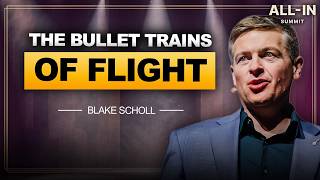
Blake Scholl: Why Plane Speed Stalled, Supersonic Commercial Flight, & Revolutionizing the Engine
All-In Podcast
9/22/2026
In a recent episode of the All-In Podcast, co-host Jason Calacanis and others welcomed Blake Scholl, the founder and CEO of Boom Supersonic. Scholl discussed his company's mission to bring back commercial Supersonic flight. He contrasted his nimble startup against legacy giants like Boeing, which he criticized for a lack of innovation over the last 20 years. Scholl recalled that even Jeff Bezos originally passed on investing in his seed round, writing in an Amazon shareholder letter that a garage startup could not build a composite airliner. However, proving the skeptics wrong and invoking the historical spirit of aerospace achievement with the phrase "Houston, we have a problem," Scholl highlighted his team's breakthroughs. With only 50 employees, they successfully built and flew the XB1, making it the first privately developed supersonic jet. The test flight was live-streamed using a supersonic installation of Starlink. To solve the historical challenge of the destructive Sonic boom—the issue that ultimately led to the demise of the Concorde—Boom implemented a technique called Boomless cruise, also known by aerospace engineers as Mach cutoff. This method directs the sound upward so it never reaches the ground. This technological success triggered rapid regulatory support. Following a swift invitation to the White House and placing a model of their aircraft in the Oval Office, the Biden Administration signed one of their recent Executive Orders to end the 1973 civilian ban on supersonic flight. D

Steve Hilton & Spencer Pratt: Fixing California, Cheaper Gas, Ballot Fraud & CA Republicans
All-In Podcast
9/22/2026
In this episode, Steve Hilton and Spencer Pratt join the podcast to discuss the political and economic landscape of California and Los Angeles. Steve Hilton, running in the California governor race as a candidate for the Republican Party, highlights the negative impacts of One-party rule by the Democratic Party. He emphasizes that extreme Regulation, high taxes driven by poor Tax Policy, and an uncompetitive Business Climate are severely impacting Affordability and fueling a massive Corporate Exodus. He points out that hidden taxes like the Cap and Invest program, driven by misguided Energy Policy, are artificially raising gas prices to fund boondoggles like the California High-Speed Rail. Hilton pledges severe cuts to the California State Government located in Sacramento, including abolishing the bloated California DMV. He heavily critiques current governor Gavin Newsom and his opponent Javier Becerra, noting that even Joe Biden administration members have criticized Becerra. Hilton notes that politicians rely on Regulatory Capture to serve donors, while pointing to Street Vending Legalization as harmful to established businesses like Langers Deli. He and Pratt reference figures like Chamath Palihapitiya, Donald Trump, and Rick Caruso when discussing the broader political dysfunction. Additionally, threats like Prop 40 further exacerbate the state's decline. Peter Thiel is referenced as calling Silicon Valley a resource curse that shields the cor

Naveen Rao: 4D Computing, AI's Energy Wall & Beating Biology
All-In Podcast
9/21/2026
In this comprehensive episode of the All-In Podcast, guest Naveen Rao—co-founder and CEO of the AI chip startup Unconventional AI—provides deep insights into the future of Hardware and AI. Rao, who firmly opposes AI Doomerism, shares his entrepreneurial journey starting with founding Nirvana systems, which he later sold to Intel. He subsequently collaborated with Ali Ghodsi at Data Bricks to build infrastructure for scaling Large Language Models (LLMs). Rao highlights a critical impending crisis: severe Energy constraints in AI. He points out that models like ChatGPT require an enormous amount of power, and processing quadrillions of AI Tokens by tech giants like Google is driving unsustainable Energy Consumption for AI. Across the US, massive Data Centers are grappling with this issue, making access to power contracts the primary bottleneck for growth. To address this, Rao argues for a radical departure from traditional systems like the CPU and GPUs. He notes that since the creation of ENIAC, computers have relied on the von Neumann architecture, which is inherently inefficient at moving data back and forth, especially as the scaling benefits of Moore's law applied to Semiconductors have largely ended. Instead of relying on traditional Linear algebra and Floating point math, Rao draws inspiration from Neurobiology and Mammalian brains to develop 4D Computing and advanced Compute in memory. By applying Dynamical systems theory, his team is bu