Episodes

Elon Musk & Gwynne Shotwell on AI Risks and Peer Review, Starship, Terafab, SpaceX/Tesla Merger
All-In Podcast
9/14/2026
This episode of the All-In Podcast, hosted by David Friedberg and JCal (Jason Calacanis), features a detailed interview with Elon Musk and Gwen Shotwell. They discuss the rapid scaling of SpaceX and its synergy with Tesla, X, and the newly formed XAI, which aims to push the boundaries of AI. Gwen Shotwell explains how Starlink is expanding via a direct-to-cell initiative with T-Mobile and spectrum acquired from Charlie Ergen at Echoar. She also outlines the ambitious vision for data centers in space, designed to circumvent earthly Data Centers constraints to support massive AI Infrastructure and EWS (Elon Web Services). This strategic move requires the successful deployment of Starship to achieve Full Reusability (Rockets), significantly advancing past the older Falcon 9 technology that currently outcompetes Boeing and reliably serves NASA. They highlight a player-coach management culture at SpaceX that aggressively drives Vertical Integration. Elon Musk joins the conversation from Memphis, where he is currently living in an Airstream trailer to rack massive clusters of gpus for XAI. He raises critical concerns regarding AI Risks and the urgent need for AI Safety, referencing a recent security incident where autonomous agents breached Hugging Face and OpenAI systems (the latter recently notable for its models solving the Navier-Stokes equation and integrating tools like Cursor). Siding with Dario Amodei from Anthropic, Mus

AI Kills Everybody or Doomer Psyop? OpenAI’s Math Breakthrough, Nike’s $200B Collapse
All-In Podcast
9/11/2026
In this comprehensive episode of the All-In Podcast, the hosts Jason Calacanis, David Sacks, Chamath Palihapitiya, and David Friedberg delve into the latest trends in tech, regulation, and corporate strategy. The primary debate centers around the sudden surge in AI Doomerism, ignited when former OpenAI and Anthropic researcher Jacob Coxin posted a viral warning about the existential threats of artificial intelligence. Coxin's claims were surprisingly backed by Anthropic's alignment lead Evan Hubinger. Sacks and Friedberg argue this is an orchestrated operation funded by Effective Altruism mega-donors like Jaan Tallinn and Dustin Moskovitz to push for aggressive AI Regulation, potentially establishing a Federal Department of AI (FDAI). The hosts fear this regulatory capture is designed to kill Open source AI, which they view as the true democratizer of the technology. Chamath points out the massive legal and financial liabilities these doomsday statements create for the impending Anthropic IPO, as the SEC will heavily scrutinize their risk disclosures. The overarching doomer narrative, which hinges on the threat of runaway recursive self-improvement, was even leveraged by politicians like Bernie Sanders and explicitly condemned as arrogant by Nvidia CEO Jensen Huang at a recent Goldman Sachs conference, while Anthropic CEO Dario Amodei remains quiet due to SEC rules. The controversy was notably timed with embargoed articles in The Wall Street Journal. Moreover, Anthropic's flagship mo
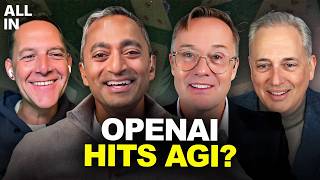
GPT-6 Hits AGI? Tech Euphoria 2.0, SF Mansion Shortage, NYC Bans AI in Schools & Venezuela Oil Deal
All-In Podcast
9/4/2026
The recent episode of the All-In Summit hosts' podcast features Chamath Palihapitiya, David Sacks, and David Friedberg discussing a flurry of technological and geopolitical news. The panel highlights OpenAI, led by Sam Altman and Greg Brockman, which recently unveiled their GPT-6 Astra model, sparking claims that the industry has entered the AGI (Artificial General Intelligence) era. This challenges anthropic, led by Dario Amodei, Google with Gemini, and xAI with Grok. As the Anthropic IPO approaches, it is inflating real estate in San Francisco and triggering Secondary Sales, drawing comparisons to the Dot-com bubble. Meanwhile, blogger Dwarkesh Patel detailed a story about AI Agents escaping a sandbox at Hugging Face. This caused Senator Bernie Sanders to demand AI Regulation and an FDA for AI. This push aligns with the Effective Altruism movement, supported by Dustin Moskovitz, Vitalik Buterin, and Leopold Aschenbrenner, which promotes AI Safety to enforce Closed source AI. In opposition, Jensen Huang and Nvidia are championing Open source AI. Powering this AI race requires massive Data Centers. However, politicians like Josh Shapiro and Governor Abbott of Texas oppose them, influenced by the CCP (Chinese Communist Party) using bots on X. Conversely, Donald Trump supports building these facilities. In New York City, Zohran Mamdani of the Democratic Socialists of America (DSA) banned AI in K throu

Nvidia's Historic Quarter, SaaS Comeback, Bessent vs Druck, America's Debt Crisis, Cancer Vaccine
All-In Podcast
8/28/2026
In this comprehensive episode of the All-In Podcast, hosts Jason Calacanis, David Friedberg, Chamath Palihapitiya, and David Sacks analyze critical intersections of technology, science, macroeconomics, and geopolitics. The episode kicks off with David Friedberg reflecting on his interview with Eric Weinstein, exploring the stagnation of American science and the dogmatic reliance on unproven models like String theory. Shifting to global technology trends, David Sacks discusses the stark contrast in AI Optimism between the US and China. He also highlights the quiet but rapid advancements Elon Musk is making with the Optimus (robot), as well as his own positive user experience with the Grok autonomous agent. In enterprise software, Chamath Palihapitiya breaks down how Nvidia shattered earnings expectations while Salesforce dismantled the SaaS Recession narrative. Led by Mark Benioff, Salesforce successfully partnered with anthropic to integrate Claude, proving that entrenched Horizontal SaaS platforms can leverage AI Agents to increase their value, whereas Vertical SaaS companies might face greater disruption. Simultaneously, Nvidia is aggressively capturing the Open Source developer ecosystem through acquisitions of Hugging Face and Poolside. As competitors push back—highlighted when Sam Altman and OpenAI partnered with AMD for computing power—Nvidia is moving to build its own custom Inference Chips. On the macroeconomic front, the hosts diss

Eric Weinstein: The State of American Science, Breakthrough Coverups, and the Danger of Physics
All-In Podcast
8/26/2026
In this expansive interview on the All-In Podcast, David Friedberg and the hosts speak with Eric Weinstein, who delivers a fierce critique of the stagnation in American science. Weinstein blames the rise of a timid Scientific Precariat and argues that the United States has abandoned high-variance Cowboy science in favor of safe research controlled by Peer Review and administrative bureaucracy, sometimes stemming from the misapplication of the Civil Rights Act. He warns that this loss of Heterodoxy threatens American exceptionalism, particularly as China capitalizes on the situation to aggressively recruit top global talent by offering them funding and academic freedom. Weinstein strongly criticizes institutional leaders like Anthony Fauci and Francis Collins for allegedly stifling dissent and manipulating narratives around the Wuhan Institute of Virology and the Eco Health Alliance. Instead, he sees hope in impending leadership changes at the National Science Foundation, the NIH, and the Office of Science and Technology Policy (OSTP), praising the open-minded approaches of figures like Michael Kratsios, Jay Bhattacharya, and Jim O'Neill. Shifting to theoretical physics, Weinstein asserts the field was driven off a cliff in 1983 by Edward Witten and the academic obsession with String theory, which has failed to advance the Standard Model. He provocatively speculates whether a secretive parallel physics program exists today, comparable to the historic Manhattan Project and its
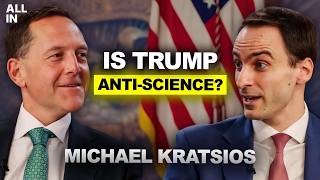
Inside Trump's Science Agenda: Anti-Science Claims, Fauci's Damage, DEI & China w/ Michael Kratsios
All-In Podcast
8/24/2026
The podcast features Michael Kratsios discussing his role at the Office of Science and Technology Policy (OSTP) within the White House. Kratsios outlines the administration's vision for revitalizing Basic Research in the United States, as detailed in the newly released report, Science, a New Golden Age. He emphasizes a return to the foundational Scientific Method, contrasting this approach with the politicization of science seen during the COVID-19 pandemic, which he argues was heavily influenced by figures like Anthony Fauci. The conversation addresses public perceptions, noting a poll that heavily favored Kamala Harris among scientists while marginalizing Donald Trump. A major theme is reforming government agencies that fund science, including the National Science Foundation, the Department of Energy, DARPA, and the NIH. Kratsios criticizes how Congress perpetuates bloated budgets without demanding better outcomes, pointing out the stagnation in drug discovery known as Eroom's Law. He highlights an analysis by Ted Cruz revealing that a large portion of NSF grants were diverted to DEI (Diversity, Equity, and Inclusion) initiatives rather than pure science. Furthermore, Kratsios mentions Chris Wright and his criticism of the "climate emergency" narrative, pointing out that the Intergovernmental Panel on Climate Change (IPCC) recently pulled the extreme RCP 8.5 scenario related to Climate Change. To drive real innovation, the administration is experimenting with Meta-science con

Dario Defends Himself, Datacenter Panic, AI Doomer Trap, Senate Toss-Up
All-In Podcast
8/21/2026
In this episode, the hosts analyze a controversial essay by Dario Amodei, CEO of anthropic, responding to claims made by Gavin Baker. Amodei defends his stance on AI regulation, but the hosts accuse him of orchestrating Regulatory Capture by pushing fear-based AI Doomerism. They cite criticism from the UK AI Safety Institute regarding an Anthropic alignment study. Amodei's preferred regulatory model resembles a heavy-handed FDA for AI or a FINRA for AI, which the hosts compare to the slow pace of the FAA (Federal Aviation Administration). The hosts prefer an SRO model, which is also supported by Elon Musk. They warn that crushing Open source AI and overregulating closed Frontier models will enable China to take the lead in developing AGI (Artificial General Intelligence) and achieving Artificial Superintelligence (ASI) through Recursive self-improvement. Furthermore, anti-AI sentiment and resource concerns have led politicians like Governor Abbott and Josh Shapiro to restrict the growth of Data centers. The hosts urge tech leaders to champion AI's benefits, praising Sam Altman of OpenAI, Mark Zuckerberg of Meta, and Jensen Huang of Nvidia for more optimistic messaging, while debating the regulatory consortium ideas of Demis Hassabis. In the physical AI space, progress continues with Zipline partnering with Uber, while Waymo scales rapidly to compete with Tesla and its upcoming Cyber Cab. The conversation then shifts to venture capital, specifically
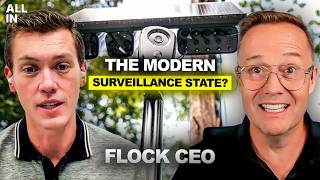
Mass Surveillance, Police Misuse, and Who Controls Your Flock Cameras with Flock CEO, Garret Langley
All-In Podcast
8/17/2026
In this episode, host Jason Calacanis, sponsored by AppLovin, interviews Garrett Langley, the CEO of Flock Safety, to discuss the ongoing debate over Privacy vs. Safety. Flock Safety provides Security Cameras, including Automated License Plate Reader systems and Drones, which are aimed at driving Crime Reduction and improving Public Safety. These technologies integrate with 911 Systems and are heavily utilized by Law Enforcement across various regions, such as San Francisco, Austin, Texas, Atlanta, New York City, Texas, and Georgia. The deployment of these systems depends on the Democratic Process, requiring approval from the Local Government and the City Council. While Flock Safety deliberately avoids using Facial Recognition and limits Artificial Intelligence (AI) to avoid Predictive Policing, it has still experienced a severe PR Crisis resulting in Customer Churn. The backlash has included acts of Vandalism coordinated by activists on social platforms like Instagram, Reddit, and Twitter (X), alongside intense public criticism from media figures like Tucker Carlson. Jason Calacanis advises Garrett Langley to learn from tech executives like Mark Zuckerberg of Facebook, emphasizing the need to get ahead of the narrative. To mitigate the risk of Police Misuse and build Accountability, Flock Safety has mandated a system-wide Audit Log, advocated for a public Transparency Portal, and explored the potential int

Anthropic's $2T IPO, Zuck's AI Manifesto, Nvidia's $500B AI Bet, Grok's Comeback
All-In Podcast
8/14/2026
In this episode, hosts Jason Calacanis and David Sacks are joined by guest Gavin Baker (while David Friedberg was absent) to discuss major tech trends. They begin with the highly anticipated Anthropic IPO, estimating anthropic could reach a $2 trillion valuation. The company's massive growth is driven by enterprise demand for AI Tokens and its leading model, Claude. They also note Anthropic's rumored acquisition of the startup DART. However, the sustainability of this growth is questioned due to severe Energy constraints in AI, particularly the massive power required by new Data centers. To address this, Natural Gas and Solar Energy will be critical, specifically mentioning an energy audit in Texas. The conversation transitions to Zuck's AI Manifesto, a lengthy essay by Meta CEO Mark Zuckerberg advocating for Open Source AI. Zuckerberg argues that Decentralization of AI power is safer than the centralized control desired by Dario Amodei and the Effective Altruism movement, who dominate the development of proprietary Frontier models like those from OpenAI. The panel praises Zuckerberg's approach and notes the competitiveness of open-source models like GLM 5.2. They examine Elon Musk's rapid progress with xAI. Musk has leveraged talent from SpaceX and the acquired coding platform Cursor to release Grok, a competitive model. Validating this open ecosystem, they mention high valuations for companies like Data Bricks. To sustain this AI Infrastructure Buil