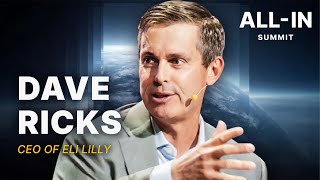
Inside the GLP-1 Gold Rush: Eli Lilly CEO on New Breakthroughs, Addiction & Mental Health, Pricing
Episode Details
In a detailed discussion, Eli Lilly CEO Dave Ricks unpacks the story behind the 'GLP-1 Gold Rush,' charting the evolution of GLP-1 drugs from a treatment for Diabetes to a revolutionary therapy for Weight Loss and Obesity. He highlights the phenomenal success of Tirzepatide, which surpassed Keytruda as the world's top-selling drug in Q2. Ricks confronts the controversial topic of GLP-1 Pricing, explaining the delicate balance between increasing access and funding future R&D, while also announcing an upcoming Oral GLP-1 pill. A significant portion of the company's strategy involves aggressive Capital Allocation towards expanding its Supply Chain by building numerous manufacturing plants in the United States, a commitment he references in connection with President Trump. The conversation also explores major market headwinds, including the proliferation of Counterfeit Products from China, the strategic threat of Patent Hacking which is influenced by the American Invents Act, and the challenging investment climate for Biotech VC. Looking ahead, Ricks reveals unexpected applications for GLP-1s in curbing Addictions and treating Mental Health conditions, potentially disrupting the market for SSRIs. He also touches on broader industry issues, criticizing the role of PBMs, questioning the efficiency of NIH funding, and explaining how outdated FDA regulations shape modern Pharma Advertising. Ricks sees AI in Healthcare as a positive force for patient empowerment and predicts that Brain Diseases represent the next major frontier for pharmaceutical innovation. The conversation notes Novo Nordisk as a key competitor and references a pivotal early study in Singapore that first demonstrated Tirzepatide's profound weight-loss effects. Ricks also comments on the movement led by Robert F. Kennedy Jr. to reform the nation's food systems.
Key Topics & People
The ecosystem and network of production, which is vulnerable to geopolitical disruptions and requires domestic capacity.

A widespread societal issue exacerbated by poor physical health and digital distraction.


The leading nation in AI innovation striving to avoid restrictive regulations that slow technological diffusion.
The intersection of AI, agentic technology, and physics applied to medical diagnosis and treatments.
US President who delivered a State of the Union address emphasizing the Rate Payer Protection Pledge and implementing sweeping tariffs.


Pharmaceutical company that developed breakthrough GLP-1 drugs, seeing massive stock growth.

An independent presidential candidate, named by Chamath Palihapitiya as the biggest political surprise of 2023 for gaining significant favorability in polls.
An upcoming pill version of the GLP-1 drug from Eli Lilly, expected next year. This format aims to improve convenience and accessibility, with a primary goal of getting it reimbursed by insurance.
A 2011 US law that changed the patent system from 'first to invent' to 'first to file'. This change incentivizes companies to file patents as early as possible, which inadvertently exposes the invention to 'patent hacking' by competitors.
Predicted by Dave Ricks to be the next major area for pharmaceutical breakthroughs, citing that they account for 40% of human suffering globally and current treatments are often inadequate.
An unexpected area of impact for GLP-1 drugs, which have been anecdotally and clinically observed to reduce hedonic, addictive behaviors such as smoking, gambling, and online shopping.
Eli Lilly's strategy for reinvesting its massive profits from GLP-1 drugs. The priorities are: 1) investing in organic R&D, 2) building out the supply chain for injectable drugs, and 3) acquiring external innovation.
A strategy where companies, particularly in China, analyze a filed patent to reverse-engineer a similar chemical structure that behaves similarly but falls outside the patent's legal scope. This is a significant threat to biotech innovation.

A dual GLP-1/GIP receptor agonist developed by Eli Lilly, marketed as Mounjaro. In Q2, it became the bestselling drug in the world, surpassing Keytruda, with $8.1 billion in revenue for the quarter.
A significant issue facing successful drugs like GLP-1s, with a large gray market, particularly involving peptide synthesis in China, producing unauthorized and potentially unsafe copies.
CEO of Eli Lilly, who provides insights into the development, success, pricing strategy, and future potential of GLP-1 drugs.
The venture capital market for biotechnology, which has plummeted from a peak of ~$20 billion to ~$5 billion a year in new investments. Dave Ricks describes the current market as a 'dumpster fire', making it difficult for new biotech firms to get funding.
A class of peptide-based drugs, originally developed for diabetes, that have become a cultural and medical phenomenon due to their significant impact on weight loss, appetite suppression, and potential uses in treating addiction and mental health issues.
A major topic of discussion concerning the high cost of GLP-1 drugs. Eli Lilly is committed to reducing the price over time while balancing the need to fund future R&D, stating they expect single-digit deflation in the category over time.
A primary and highly popular application for GLP-1 drugs, which suppress appetite and reduce 'food noise', leading to significant changes in body weight and BMI.

The practice of advertising prescription drugs directly to consumers, which accounts for a significant portion of mainstream media revenue. Dave Ricks states he would support a system with less of it, noting its inefficiency and the outdated regulations governing it.