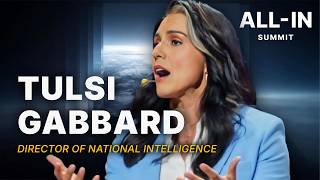
Tulsi Gabbard on Russiagate Hoax Evidence and How She’s Reforming Politicized Intelligence Agencies
Episode Details
In an extensive interview on the All-In Podcast, Tulsi Gabbard, serving as Director of National Intelligence under President Donald Trump, laid out her case for the existence of a Russiagate Hoax. She claims this was a deliberate campaign of Politicized Intelligence designed to undermine Trump's presidency following his victory over Hillary Clinton in the 2016 US Presidential Election. According to Gabbard, the effort was orchestrated by the outgoing Obama Administration, with key figures like DNI James Clapper, CIA Director John Brennan, and FBI Director James Comey at the helm. She alleges they reversed the Intelligence Community's initial assessment—which found no evidence of Russia or its leader Vladimir Putin impacting the election outcome—by ordering a new assessment to prove interference. This involved leveraging unreliable sources like the Steel Dossier, which the CIA's own officials reportedly questioned, and launching the FBI's Crossfire Hurricane investigation, which used illegal warrants from the FISA court. Gabbard highlighted the resistance from then-NSA head Mike Rogers, who refused to endorse the assessment without proper vetting. She compares this event to the flawed Iraq War Intelligence that was allegedly manufactured under pressure from Vice President Dick Cheney. As head of the Office of the Director of National Intelligence (ODNI), Gabbard is declassifying documents and has referred the findings to the Department of Justice (DOJ) to ensure accountability. The discussion also covered her political evolution, from leaving a Democratic Party she finds unrecognizable to campaigning for Trump alongside Bobby Kennedy, and the mixed reception she receives in her home state of Hawaii. On national security, she defended the administration's precise military strike against Iran, known as Operation Midnight Hammer, and its aggressive stance on the Southern Border, which includes designating Drug Cartels as terrorist organizations to combat the devastating Fentanyl crisis, a problem exacerbated by precursor chemicals originating from China. The initial allegations that fueled the hoax, such as a meeting involving Donald Trump Jr., were also touched upon as part of the broader fabricated narrative.
Key Topics & People

47th US President who appointed tech leaders to PCAST.
The podcast featuring the interview on longevity, psychedelics, and technology.


The political party John Fetterman belongs to, which he criticizes for drifting away from its core historical values.
The federal executive department responsible for law enforcement, criticized for allegedly politicized prosecutions.
A severe public health crisis in the United States fueled by the influx of synthetic opioids manufactured with foreign precursor chemicals.
.jpg?width=300)
President of Russia who initiated the invasion of Ukraine and is discussed as the primary driver of the conflict.
The US-Mexico border experiencing record numbers of migrant encounters.

Former US President described as an intellectual outlier, highly composed, and an excellent statesman.
Collaborated with the Department of Commerce on the pharmaceutical pricing strategy. His team led the negotiations while Howard Lutnick provided the 'hammer' of potential tariffs.

A former congresswoman mentioned as a potentially more impactful VP pick for Robert F. Kennedy Jr. that would have 'blown the doors off' his campaign. She is also seen as a potential VP candidate for Donald Trump.
The presidential administration from 2009-2017, which Bessent characterizes as a period of very poor economic growth where asset owners accumulated wealth while others did not.

_(cropped).jpg?width=300)
Son of Donald Trump, mentioned in the interview as having met with Russians at Trump Tower, which contributed to the narrative of collusion.

Former Vice President of the United States who, according to James Clapper's own book, pressured the intelligence community to produce intelligence that would justify the war in Iraq.
The presidential election in which Donald Trump defeated Hillary Clinton. The Russiagate narrative was created to undermine the outcome of this election.
Criminal organizations, primarily based in Mexico, that were designated as foreign terrorist organizations by the Trump administration due to their violent activities, trafficking of fentanyl, and impact on U.S. national security.
A historical example of politicized intelligence where, according to James Clapper's book, the intelligence community was pressured by Dick Cheney to create a narrative supporting the 2003 invasion of Iraq, particularly regarding weapons of mass destruction.

Former head of the National Security Agency who resisted pressure from DNI James Clapper to approve the intelligence assessment on Russian meddling without proper vetting.
A controversial private intelligence report containing allegations of conspiracy between the Trump campaign and Russia, which Gabbard describes as a 'manufactured political document that was filled with falsehoods' and was used as a source for the official intelligence assessment.
The U.S. government office that oversees the Intelligence Community, currently led by Tulsi Gabbard. She has used this position to declassify documents and reform the agency.
Director of the CIA under President Obama. He is accused of using non-credible sources like the Steele Dossier to create the Russiagate intelligence assessment and hiding these sources from Congress.

The code name for the FBI's counterintelligence investigation into links between Russian officials and associates of Donald Trump's campaign.

Director of National Intelligence under President Obama. Gabbard accuses him of pressuring the NSA to sign off on the manufactured intelligence assessment and of previously admitting to creating intelligence that 'wasn't there' for the Iraq War.
.jpg?width=300)
The 2016 Democratic nominee for President. Gabbard states that Clinton 'seated the allegation' of collusion between Trump and Russia during the campaign.

Former Director of the FBI during the 2016 election. He is implicated by Gabbard as one of the key figures who manufactured the Russiagate narrative.
The Foreign Intelligence Surveillance Court, which was allegedly misled by the FBI to grant warrants for illegally surveilling American citizens associated with the Trump campaign.
A political narrative and series of investigations alleging collusion between Donald Trump's 2016 presidential campaign and the Russian government. Gabbard describes it as a 'hoax' founded on manufactured, politicized intelligence.
The manipulation of intelligence gathering, analysis, and reporting to favor a specific political outcome or narrative, rather than providing objective truth. Gabbard cites this as a major threat to the republic.
A coalition of 17 U.S. government agencies and organizations that work to gather intelligence information. Gabbard asserts that there is deep 'rot' within the community due to politicization.
A precise military operation executed by the Trump administration against Iran, which Gabbard describes as having a clear objective and exit strategy.