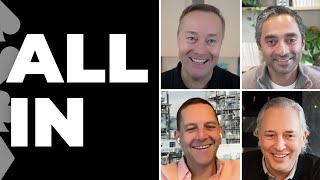
E157: Epic legal win, OpenAI's news deal, FCC targets Elon, the limits of free speech & more
Episode Details
In this episode, the All-In hosts Jason Calacanis, David Sacks, Chamath Palihapitiya, and David Friedberg dive into several major legal and political tech stories. The discussion begins with the landmark Epic vs. Google lawsuit, where Epic Games, makers of Fortnite, won its case against Google. A jury found that the Google Play Store on Android constitutes an App Store Monopoly and that Google engaged in Antitrust Violations. The hosts debate the implications of this verdict, the oppressive 30% App Store Tax, and contrast the outcome with the case where Apple defeated Epic over its Apple's App Store on iOS. Next, they cover OpenAI's new strategy of pursuing Licensing deals for generative AI, highlighted by a partnership with media company Axel Springer. This sparks a debate on AI Copyright and Fair Use, with Jason Calacanis arguing for protecting creators' rights and David Friedberg explaining the distinction between training on open data and paying for proprietary content to integrate into services like ChatGPT. A significant segment is dedicated to the perceived Regulatory Harassment of Elon Musk by the Joe Biden administration. The hosts discuss the FCC's rejection of Starlink subsidy, a $900 million fund for Rural Broadband, a decision publicly condemned by FCC Commissioner Brendan Carr. This is framed as part of a broader pattern of agencies like the DOJ and IRS targeting Musk's companies, Tesla and SpaceX, with actions such as lawsuits and unfavorable changes to the EV Tax Credit. The conversation also touches on media bias, citing an instance where the New York Times allegedly misquoted Hunter Biden. The podcast then tackles the controversial Alex Jones reinstatement on X. Elon Musk's decision to bring back Alex Jones to Twitter (X) ignites a discussion on Free Speech, Censorship, and Content Moderation. David Sacks warns of the Slippery Slope (Censorship) that began with Jones's initial ban, while others grapple with the real-world harm caused by his Sandy Hook conspiracy theory. A clip of Joe Rogan offering a nuanced but critical perspective on Jones is also discussed. The debate explores the responsibilities of platform owners and the principles of the First Amendment. Finally, the hosts answer audience questions, touching upon the controversy at Harvard over its president, which they link to the problematic nature of DEI (Diversity, Equity, and Inclusion) policies, and conclude with an insightful discussion on effective Hiring Strategy for new graduates in today's environment.
Key Topics & People

.jpg?width=300)
.jpg?width=300)
Podcast host, investor, and organizer of the All-In Liquidity Conference.

Podcast host, scientist, and newly appointed member of PCAST.
Podcast host, investor, and newly appointed co-chair of PCAST.
.jpg?width=300)
Podcast host and tech investor discussing consumer AI trends.


Social media platform where crypto and automated trading discourse heavily takes place.
.jpg?width=300)
Son of President Joe Biden, involved in overseas business dealings notably with Burisma.

An organizational framework prioritizing race and gender which the hosts and guests debated.
A prominent newspaper referenced regarding institutional capture and its coverage of the Ukraine war.

The suppression of speech, public communication, or other information.

The amendment to the US Constitution that protects freedom of speech. It is the cornerstone of the American approach to speech and is often circumvented by the 'Censorship Industrial Complex'.
A central theme of the discussion, contrasting the strong protections in the United States under the First Amendment with the more restrictive approaches in Europe.
.jpg?width=300)
The decision by the Federal Communications Commission to deny a $900 million subsidy to Starlink for providing rural broadband, an action labeled as political 'regulatory harassment'.
Elon Musk's decision to restore Alex Jones's account on Twitter (X) following a user poll, which served as a focal point for a debate on free speech and content moderation.
A major antitrust lawsuit in which a jury unanimously found that Google's Play Store practices were illegal and anti-competitive. Epic Games was the plaintiff.

Google's app distribution platform for Android, which was the subject of the Epic Games lawsuit where it was found to have monopolistic characteristics that stifle competition.
The false and malicious claim promoted by Alex Jones that the Sandy Hook Elementary School shooting was a staged hoax. His comments on this were the primary reason for his widespread deplatforming.
A discussion on the best ways to hire new graduates, with suggestions including focusing on co-op programs and evaluating candidates on criteria like raw horsepower, skills, motivation, and principles.
The alleged use of government regulatory agencies to target political opponents. This term was used by FCC Commissioner Brendan Carr to describe actions against Elon Musk's companies.
The argument that banning one person or type of speech (like Alex Jones) will inevitably lead to broader, more extensive censorship of other views, which Sacks argues has been proven correct.
The commission rate (often 30%) charged by Apple and Google on transactions within their app stores, which is a major point of contention for developers like Epic Games.

A controversial conspiracy commentator who was reinstated on Twitter (X) by Elon Musk, sparking a debate on free speech, censorship, and platform responsibility.
The concept that mobile app stores, particularly those run by Apple and Google, operate as monopolies or a duopoly, controlling software distribution and extracting high fees.

A media company that signed a licensing deal with OpenAI to provide real-time news content from its brands like Politico and Business Insider to ChatGPT users.

Apple's app distribution platform for iOS, also criticized for its 30% fee and monopolistic control, though Apple won its legal case against Epic Games.
A government subsidy for electric vehicle purchases. The IRS is accused of changing the rules to specifically disadvantage Tesla, as part of a broader pattern of regulatory pressure.
Internet service for remote and underserved areas. Starlink's application for $900 million in federal subsidies to provide this service was rejected by the FCC.
A business model where AI companies pay content owners for the right to use their data, either for training models or for real-time content integration, as seen with OpenAI's deal with Axel Springer.
The legal and ethical issues surrounding the use of copyrighted material to train AI models and generate derivative works, a key point of debate between the hosts.
The policies and practices used by platforms like Twitter (X) to monitor and control user-generated content, debated in the context of handling figures like Alex Jones.
Illegal practices that stifle competition. Google was found by a jury to have committed antitrust violations with its Play Store policies.


An FCC Commissioner who dissented from the decision to deny Starlink subsidies, calling it 'regulatory harassment' and part of a politically motivated pattern by the Biden administration.

A video game company, creator of Fortnite, that won a major antitrust lawsuit against Google regarding its app store policies.