Episodes

Bill Ackman: Here's What the Market is MISSING
All-In Podcast
6/3/2026
In this podcast episode featuring David Sacks and Chamath Palihapitiya, legendary investor Bill Ackman, founder of Pershing Square, discusses his evolving investment philosophy. Initially known for activist campaigns like pushing Wendy's to spin off Tim Hortons with help from Steve Schwarzman of Blackstone, he now focuses on durable growth. He considers tech giants like Microsoft, Meta, and Amazon as undervalued compared to the broader AI hype cycle. While Ackman acknowledges the massive venture-like valuations of private AI firms such as anthropic and Palantir, he specifically praises the leadership at OpenAI, including CFO Sarah Friar and Sam Altman. Prompted by Ron Baron, Ackman also holds a position in xAI, emphasizing how Elon Musk lowers the cost of capital for SpaceX, Starlink, and Tesla by cultivating a massive follower base—a phenomenon also observed with Ryan Cohen and GameStop. By contrast, legacy competitors like Blue Origin and Salesforce face unique challenges. Ackman draws a sharp distinction between Founder-led companies and those run by typical S&P 500 CEOs. He argues that founders, like Mark Zuckerberg who boldly acquired Instagram and WhatsApp for Meta, possess the authority to make difficult, long-term decisions. Drawing inspiration from Warren Buffett at Berkshire Hathaway and value investing pioneer Ben Graham (known for Geico), Ackman is transforming the Howard Hughes Corporation—a real estate spin-off

OpenAI CFO Sarah Friar: IPO, AI Rivalries, New Device, and Spending $100B+ on Compute
All-In Podcast
6/2/2026
In a recent podcast, Sarah Frier, CFO of OpenAI, provides an inside look at the company's massive $122 billion fundraising round and their strategy in the ongoing AI Arms Race. When asked about a potential IPO, she mentioned reading an article in The Wall Street Journal about the benefits of going public early. She compared their timeline to other giants like SpaceX and addressed competition from anthropic, which recently submitted confidential filings to the SEC, as well as from Google, which dominates traditional Search Engines. Friar emphasized that OpenAI is not just a consumer company—though they have massive reach through Consumer AI interfaces like ChatGPT and the video generation model Sora—but heavily focused on Enterprise AI. For instance, the Codex model has rapidly grown to 5 million users. With new revenue head Denise Dresser, they are working closely with major enterprises like Thermo Fisher (who uses AI to accelerate FDA approvals) and Travelers. Ultimately, their guiding mission remains achieving AGI (Artificial General Intelligence). A significant portion of the discussion revolved around AI Compute Power and infrastructure. To maintain flexibility and improve Gross Margins, Friar detailed OpenAI's rigorous Capital Allocation strategy, focusing on high Return on Invested Capital (ROIC). Leaders like Sam Altman and Greg Brockman foresaw these compute bottlenecks early. As a trustee at Stanford, Friar also values educational partnerships in this

Anthropic's Digital God, Pope vs AI, Job Loss Narrative Flips, Open Source Crackdown Coming?
All-In Podcast
5/29/2026
The All-In Podcast features host Jason Calacanis, David Sacks, Chamath Palihapitiya, and guest Bill Gurley discussing AI's impact on business, technology, and society. They begin by emphasizing the importance of Vibe Coding and using tools like Claude to enhance personal productivity. The conversation transitions to the Pope's AI Encyclical, where David Sacks warns against Regulatory Capture by big tech. Bill Gurley introduces his Dr. Frankenstein theory to describe the leadership at Anthropic, specifically CEO Dario Amodei, Chris Olah, and Amanda Askell. He references Amodei's essay Machines of Loving Grace and notes their apparent goal to midwife a digital god, combining AI Doomerism with advocacy for Universal Basic Income (UBI). This centralization is contrasted by historical concerns raised by Elon Musk to Larry Page regarding Google's acquisition of DeepMind, which ultimately led to the founding of OpenAI, currently led by Sam Altman. Today, the hosts champion Open-source AI and the concept of Intelligent Sovereignty, noting that companies like Apple are uniquely positioned to offer private, local AI capabilities on devices like the Mac Studio. They discuss Benchmark Saturation in frontier models, highlighted by a study from Rogo, which suggests that models are commoditizing. This drives the need for integration standards like the Model Context Protocol (MCP) governed by the Linux Foundation, and platforms like Abacus that allow enterpri

SpaceX’s $2T Case, Nvidia’s Shock Selloff, America Turns on AI, Trump Pulls AI Order, Bond Crisis?
All-In Podcast
5/22/2026
The All-In Podcast covers several massive shifts in the technology and macroeconomic landscape. It begins by analyzing Andrej Karpathy leaving OpenAI and joining anthropic, led by Dario Amodei, to focus on recursive self-improvement and advancements in Claude. Karpathy, known for coining Vibe Coding, adds massive talent firepower. The hosts address the growing Anti-AI Sentiment and Job Displacement fears, critiquing tone-deaf messaging from CEOs like Matthew Prince of Cloudflare and Mark Zuckerberg of Meta. Instead, they agree with Shyam Sankar that the industry should focus on end-user benefits. A pulled Biden Executive Order on AI sparks a debate on AI Regulation and the ongoing US-China Rivalry between the United States and China. The conversation then shifts to the highly anticipated SpaceX IPO. Beyond Starlink and Starship's promise of Full Reusability (Rockets), the hosts, including Chamath Palihapitiya, highlight a massive revenue unlock via Colossus data centers, making Elon Musk a major player in the AI Infrastructure Buildout. This includes a compute deal with Anthropic under the umbrella of EWS (Elon Web Services), and enabling Cursor to train its models, heavily boosting xAI and their model Grok. They also speculate on Amazon entering the fold and the future reality of data centers in space. Financially, Nvidia and its CEO Jensen Huang continue to crush earnings, driven by demand for the H100 and innovations in Dis

Trump-Xi Summit, Benioff: "Not My First SaaSpocalypse," OpenAI vs Apple, Multi-Sensory AI, El Niño
All-In Podcast
5/15/2026
The recent episode of the All-In Podcast features host Jason Calacanis, Chamath Palihapitiya, David Friedberg, and the absent David Sacks discussing major geopolitical, technological, and economic shifts with guest Marc Benioff, the CEO of Salesforce. The conversation begins with the historic Trump-Xi meeting between Donald Trump and Xi Jinping, which centers on aligning the economies of the United States and China. Trade dynamics and data localization rules heavily affect prominent leaders like Tim Cook of Apple and Elon Musk of Tesla, who face growing competition from aggressive Chinese EV makers like BYD. To navigate this complex landscape, Salesforce has utilized an exclusive partnership with Alibaba. Geopolitically, the focus remains tightly on the semiconductor industry and the strategic importance of Taiwan and its chip giant TSMC. Simultaneously, United States export controls attempt to limit Chinese champions like Huawei, while domestic leaders like Nvidia, led by Jensen Huang, push the extreme limits of AI infrastructure with technologies like the Blackwell chip. Influencing these geopolitical policies are major financial donors like Andreessen Horowitz. Beyond conventional chips, next-generation manufacturing is being revolutionized by hardware from companies like Neuralink. The discussion then aggressively pivots to the severe SaaS Recession impacting the software industry, highlighted by valuation collapses in formerly high-flying companies like H

How We Grew Koch Inc. to $150 Billion Without Going Public: Charles & Chase Koch
All-In Podcast
5/12/2026
In this comprehensive interview, David Friedberg speaks with Charles Koch and Chase Koch about the incredible scaling and unique business philosophy of Koch Industries, a company originally established by Fred Koch. Headquartered in Wichita, the private organization deliberately avoids the typical monoculture found in Silicon Valley and corporate hubs like New York City. Over the decades, Charles Koch, with the help of his brother David Koch, transformed the business by instituting Principal-Based Management, a framework that actively rejects bureaucratic Top-down control in favor of Bottom-up empowerment. Their philosophy focuses on remaining Capability Bounded rather than industry-bounded, organizing the company as a Republic of Science built on the ideals of Experimental Discovery and Creative Destruction. Utilizing the principles of Comparative Advantage and Division of Labor—concepts Charles Koch analyzed during his early days at Arthur D. Little and while earning degrees at MIT—the company executed massive cultural turnarounds. This approach was highly successful during challenging acquisitions, such as replacing the 51-story hierarchy of Atlanta-based Georgia-Pacific with meritocratic systems under leaders like Joe Moeller, turning around tech acquisitions like Molex, and managing union challenges at a refinery in Minnesota. Charles Koch explicitly contrasts this highly integrated operational style with the decentralized model employed by Warren Buffett
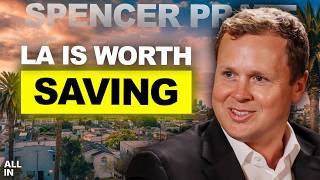
Spencer Pratt on Fixing LA: Wildfires, Homelessness, Corruption & the Fight to Take It Back
All-In Podcast
5/10/2026
In a wide-ranging interview on the All-In Podcast, former reality star Spencer Pratt discusses his populist campaign for Mayor of Los Angeles, mirroring the outsider approach of Donald Trump. Pratt's political awakening occurred when he lost his home in the Palisades Fire, part of the broader crisis of LA Wildfires. He strongly criticizes city and state officials for their incompetence, pointing to the LADWP and its former CEO Janice Quinionz for draining vital reservoirs, requiring federal and state intervention from the US Forest Service (discussed with chief Bobby Garcia) and CalFire. Pratt blames this disaster on the overarching Political Corruption in the city. Pratt is fiercely opposing incumbent Mayor Karen Bass and councilwoman Nithya Raman, tying their destructive governance to the Democratic Socialists of America (DSA) and the radical ideology of Socialism. He contrasts this radicalism with traditional figures of the Democratic Party like Bill Clinton, and appeals to voters across the aisle, including the Republican Party. Pratt even consulted billionaire Rick Caruso and is fighting against the broader state machine led by California Governor Gavin Newsom. At the center of Pratt's platform is the rampant Homelessness crisis, which he correctly diagnoses as a severe Addictions and mental health problem. He accuses NGOs, specifically naming FireAid and the Weingart Center, of siphoning billions of taxpayer dollars with zero accountability. To end this, he pl

Elon’s Anthropic Deal, The Next AI Monopoly?, “FDA for AI” Panic, Trading the AI Boom
All-In Podcast
5/8/2026
The recent episode of the All-In Podcast features Chamath Palihapitiya, David Sacks, Jason Calacanis, and Brad Gerstner discussing major geopolitical and tech shifts. The conversation starts with local politics, noting Spencer Pratt gaining traction against Karen Bass in the LA mayoral race. Jason Calacanis also mentions the controversy where Zohran Mamdani targeted the home of Ken Griffin. The primary tech discussion revolves around Elon Musk and SpaceX executing a massive compute deal with anthropic, led by Dario Amodei. By leasing Colossus to anthropic, Elon Musk introduces EWS (Elon Web Services) as a direct competitor to hyperscalers like AWS, Azure, and Google Cloud. This deal provides the Data Centers and Blackwell GPUs necessary to train Claude and compete against OpenAI and their new model, Spud. Simultaneously, it subsidizes xAI to train Grok and form partnerships with companies like Cursor. David Sacks argues that anthropic's exponential growth makes it the fastest-growing monopoly, comparing it to John D. Rockefeller, while noting that older tech giants like Apple, run by Tim Cook, lack this explosive innovation. The hosts also address the White House and US Government considering an FDA for AI as a form of AI Regulation to enforce AI Safety. This was triggered by advanced models like Mythos which raised concerns about Cybersecurity in the AI era. Officials like Kevin Hasset and Scott Bessent weig

OpenAI Misses Targets, Codex vs Claude, Elon vs Sam Trial, Big Hyperscaler Beats, Peptide Craze
All-In Podcast
5/1/2026
The recent episode of the All-In Podcast featured a wide-ranging discussion led by hosts Jason Calacanis, David Friedberg, David Sacks, and Chamath Palihapitiya. They started by analyzing how OpenAI, under Sam Altman, alongside Sarah Frier and Greg Brockman, reportedly missed targets for ChatGPT. However, the company is advancing rapidly with GPT 5.5 and the Codex model, keeping them competitive against anthropic and its CEO Dario Amodei, who are managing compute constraints with Claude and Opus 4.7. Elon Musk continues to challenge the landscape with Grok and leveraging computing excess from SpaceX, all while pursuing Elon Musk's lawsuit against OpenAI. The hosts highlighted how Hyperscalers like Google (pushing Gemini), Microsoft, Amazon, Meta, and Oracle are driving a historic Capex Boom centered around Cloud Computing. This massive AI Infrastructure Buildout is creating unprecedented Energy demand for AI, prompting interest in highly efficient SLMs (Small Language Models). In the developer space, Aaron Levie criticized the hype around Vibe Coding, noting risks highlighted when a non-engineer using Cursor 2.0 accidentally deleted a codebase. In the enterprise software sector, Cybersecurity in the AI era is exploding. Executives like George Kurtz of CrowdStrike and leaders at Palo Alto Networks see immense opportunities to defend against both domestic threats and foreign models like China's Deep Seek, as well as so