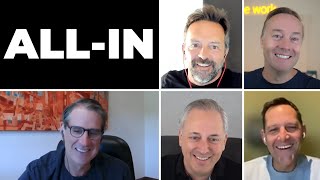
E141: State of Series A's, VC dry powder, IPO window opens + more with Bill Gurley & Brad Gerstner
Episode Details
In episode 141 of the podcast, hosts Jason Calacanis, David Sacks, and David Friedberg are joined by guests Bill Gurley and Brad Gerstner, while Chamath Palihapitiya is absent. The group exchanges career advice, discussing how reading biographies of influential figures like Steve Jobs, Elon Musk, Akira Kurosawa, Danny Meyer, and Stephen King can help founders optimize their Software Business Models. The conversation heavily focuses on the current state of Venture Capital. Data from Carta shows a significant slowdown in Series A funding, reflecting what Sacks calls a SaaS Recession, even as AI (Artificial Intelligence) continues to see a specialized valuation mania. The panel unpacks the myth of Dry Powder, explaining that Limited Partners (LPs) are putting intense pressure on General Partners (GPs) because of the Denominator Effect, which has left LPs overweight in Private Markets. With the M&A Market chilled by regulators, companies in the Unicorn Economy must look to the reopening IPO Market. Morgan Stanley is preparing potential listings for companies like Instacart, Arm, Klaviyo, and Reddit. However, because of bloated valuations and complex Liquidation preference stacks, many of these listings will be Down rounds. Gerstner, a Crossover investor inspired by Warren Buffett, notes that private portfolios are increasingly benchmarked against liquid public indices like the S&P 500 and the QQQ. Gurley highlights that the power law distribution, a strategy championed by top-tier firms like Sequoia Capital and Benchmark, continues to drive the industry, as seen in massive outcomes like Y Combinator's early bet on Stripe and SoftBank CEO Masayoshi Son's backing of Arm. Finally, the group reviews macro conditions. Recent CPI (Consumer Price Index) data points to Disinflation, yet the San Francisco Fed indicates high effective borrowing rates due to quantitative tightening by the Federal Reserve (Fed). Veteran investors like Stan Druckenmiller warn that a towering Debt Bubble across consumers and governments still threatens the broader economy.
Key Topics & People
Early-stage investing, currently heavily directing hundreds of billions into the AI ecosystem.

Host of the All-In Podcast who interviewed Billy Evans.

Podcast host critical of regulatory manipulation and enterprise SaaS economics.

Investor and podcaster analyzing complex debt structures and macroeconomic risk.

Podcast host directing the dialogue on technology market shifts and venture capital.

Prominent venture capital firm.

Legendary investor who delivered a presentation on failure analysis and COVID-19 origins.

Famous investor quoted on the relationship between interest rates and stock valuations.

Founder and CEO of Altimeter, who presented on the state of the AI market and the broader economy.
Transformational technology driving massive data center and energy demands.

Late CEO of Apple, cited as a gold standard for enforcing strict corporate communication disciplines.
A legendary macro investor who publicly criticized US fiscal policy and the Treasury's bond market interventions.
A widely held but recently challenged market narrative predicting the collapse of software-as-a-service business models due to AI.

A critical venture capital term dictating that preferred investors receive their capital back prior to common shareholders in a sale.

Renowned restaurant owner in New York City and founder of Shake Shack.
Capital committed to private equity or venture funds that has not yet been invested.
The managers of a venture capital fund who decide where to invest the committed capital.
When public portfolio values drop, private asset allocations become overweight, forcing LPs to halt new private investments.
An investor who actively participates in both private venture markets and public stock markets.

A decrease in the rate of inflation, becoming a prominent theme for the summer.


Investment bank organizing conferences to gauge IPO buyer interest.
Record-high consumer and government debt levels presenting macroeconomic risks.
The US Central Bank responsible for interest rate hikes affecting the broader economy.
Monetary policy maneuver shrinking central bank balance sheets, causing higher effective interest rates.
Federal Reserve Bank branch reporting on the effective funds proxy rate.
Economic measure of inflation showing smaller gains in recent months.

Founder and CEO of SoftBank.


Leading startup accelerator that participated in Stripe's early seed round.
The dynamic in venture investing where a tiny percentage of companies generate the vast majority of returns.

Investment markets for unlisted companies, which were vastly overvalued compared to historical norms.
Mergers and acquisitions environment, currently chilled by regulatory pressure from the FTC.
Funding rounds where a company raises capital at a lower valuation than its previous round.
The ecosystem of private tech companies valued at over $1 billion.


The market for Initial Public Offerings which is showing signs of reopening.
Institutional or high net-worth investors who provide capital to venture funds.
Frameworks for building and scaling software companies facing customer austerity.
Famous author whose book 'On Writing' was recommended for its insights on effort and craft.
Famous film director whose autobiography and films were highly recommended for founders.