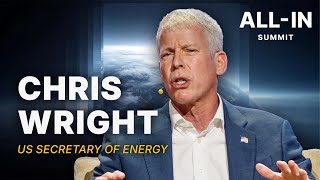
Energy Secretary Chris Wright on the Future of American Energy | All-In Summit 2025
Episode Details
At the All-In Summit, U.S. Secretary of Energy Chris Wright detailed the Trump Administration's 'humans first' energy policy, which champions reliable and affordable power from Hydrocarbons like Natural Gas and Coal, and aims to revitalize Nuclear Energy. This revival includes fast-tracking next-generation Small Modular Reactors (SMRs), with a key demonstration project planned at the Idaho National Laboratory. Wright argued that policies driven by an 'irrational fear' of Climate Change have damaged the Electricity Grid by subsidizing intermittent sources like Solar Energy and Wind Energy, which he controversially labeled 'parasites'. He contrasted the U.S. situation with China's pragmatic strategy of rapidly building nuclear and coal plants while also dominating the solar supply chain. The discussion, featuring challenges from Jason Calacanis and David Sacks, heavily focused on the surging power demand from AI Data Centers. Wright's proposed solutions include expanding the use of Natural Gas and leveraging land at the nation's 17 National Labs for rapid data center construction. He explicitly rejected the views of Elon Musk on the future of Solar Energy and Batteries. In a counterpoint, panelist Chamath Palihapitiya reframed the debate, viewing energy as a core Energy as a National Security Issue and promoting a future with a Distributed Utility model powered by homeowner solar and Batteries. Wright also confirmed the spirit of the DOGE program continues within the Department of Energy and referenced data from the Intergovernmental Panel on Climate Change (IPCC) to argue that the economic threat of global warming is often overstated.
Key Topics & People
.jpg?width=300)
.jpg?width=300)
Podcast host, investor, and organizer of the All-In Liquidity Conference.
Podcast host, investor, and newly appointed co-chair of PCAST.
.jpg?width=300)
Podcast host and tech investor discussing consumer AI trends.
Renewable energy source generated via solar panels to power AI infrastructure.
Renewable energy source utilized extensively for powering data centers.

Infrastructure powering artificial intelligence, which some politicians wish to halt.
A new class of smaller, factory-built nuclear fission reactors that are seen as a key future energy source for power-intensive AI data centers. Crusoe is planning to use them by 2027.
The administration of the 47th US President, which Andrew Feldman praised for its AI policy, particularly in empowering allies and streamlining regulations.
A US federal department whose national labs hold vast amounts of scientific data that could be used to train AI models for scientific discovery.

The US Secretary of Energy, who has directed changes to make collocation of data centers and power generation easier.
Fossil fuels, particularly oil, which Chamath predicts will be a poor-performing asset due to the inexorable trends of electrification and energy storage.
A topic Carlson dismisses as propaganda and a fraudulent theory, while acknowledging that the climate does change naturally. He views the 'climate crisis' narrative as a manifestation of prosperous societies wanting to make themselves less prosperous.

Trump views nuclear power as a strong energy source necessary for the US to compete, particularly to power AI, but acknowledges significant cost and regulatory issues in the US compared to China.
A rebranded initiative at the Department of Energy that brings smart technical and financial experts from the private sector into government service to improve processes and decision-making.
A framework proposed by Chamath Palihapitiya, arguing that a country's primary energy goal should be self-reliance and independence, which explains why China invests in all forms of energy production.
A concept championed by Chamath Palihapitiya where homeowners generate their own electricity using solar panels and batteries, creating a decentralized utility network that complements the main grid.
A scientific body whose economic projections are cited by Chris Wright to argue that the economic impact of climate change by the end of the century is relatively minor compared to other global problems.
A network of 17 government research facilities described as 'gems' of scientific discovery. They are being considered as sites for new data centers to quickly meet AI's energy demand.

A federal research facility where a demonstration Small Modular Reactor will be running, showcasing its ability to sell electricity.

The national infrastructure for power delivery, which is facing challenges from rising prices, increased complexity due to intermittent renewables, and surging demand from data centers.
Identified as the fastest-growing energy source globally and the primary, cheapest, and fastest solution for powering the increasing demand from AI data centers in the U.S.